A plain instructional resource: the movement pattern, the positions you can use, and the everyday habits that keep a short practice going. Nothing here is a promise.
This site is a plain instructional resource for men in Indonesia who want to understand pelvic floor exercises and build a simple at-home routine. Everything here is educational. We describe the movement pattern, the positions you can use, and everyday habits that support the practice.
We do not promise outcomes, and we do not replace advice from a qualified professional who knows your situation. We do not sell a program and we do not run affiliate offers.
Before you start any section, read the disclaimer at the top of the page. It stays there on every page for a reason.
What the pelvic floor muscles do
The pelvic floor muscles sit at the base of the pelvis. In men they support the bladder and bowel openings, and they play a role in everyday functions you probably do not think about. Guidance pages usually introduce them with a simple squeeze-and-lift cue rather than medical vocabulary. That is the approach we take here too.
If you can sense a gentle lift between the anus and the scrotum, you have found the general area. You do not need to know anatomy terms to practise. You need to know how to squeeze, how to let go, and how to keep breathing while you do it. Those three things carry most of the routine.
Squeeze
A gentle lift, no clenching elsewhere.
Let go
Full release between every repetition.
Breathe
Steady breath the whole way through.
Two patterns, one muscle group
The two basic movement patterns
Almost every beginner plan uses two variations. Slow holds ask you to squeeze, hold for a few seconds, and release fully. Quick contractions ask you to tighten and release in a faster rhythm. Health New Zealand describes short fast contractions placed after slower holds, and NHS resources describe quick tighten-and-release repetitions in a similar way. The purpose is variety within the same muscle group, not two separate programs.
Start with slow holds. Add quick contractions once the slow ones feel controlled rather than rushed.
Pattern one
Slow holds: squeeze, hold, relax
A slow hold has three parts and the third one matters most. Squeeze gently, hold for a short count, then relax completely before the next repetition. Many guidance pages recommend keeping the thighs, buttocks, and abdomen relaxed while you practise, so the work stays in the pelvic floor rather than the surrounding muscles.
Fully letting go between reps is the part beginners skip. Treat the relaxation as part of the repetition, not as a pause before the real work starts.
Pattern two
Quick contractions: short and controlled
Quick contractions are short tighten-and-release repetitions. They are usually paired with slow holds in beginner routines rather than done on their own. The movement is small. You are not trying to squeeze harder than in a slow hold, only faster.
If the quality drops and you start holding your breath, stop the set and return to slow holds.
Where to practise: lying, sitting, standing
You can practise lying down, sitting, or standing. Lying down is usually the easiest place to notice the squeeze and keep the rest of your body relaxed. Sitting is convenient and closer to how you use these muscles during the day. Standing is the hardest of the three because gravity and balance add work.
Our page on exercise positions walks through all three with cues for each. A common path is to start lying down, move to sitting once the squeeze feels clear, and then try standing.
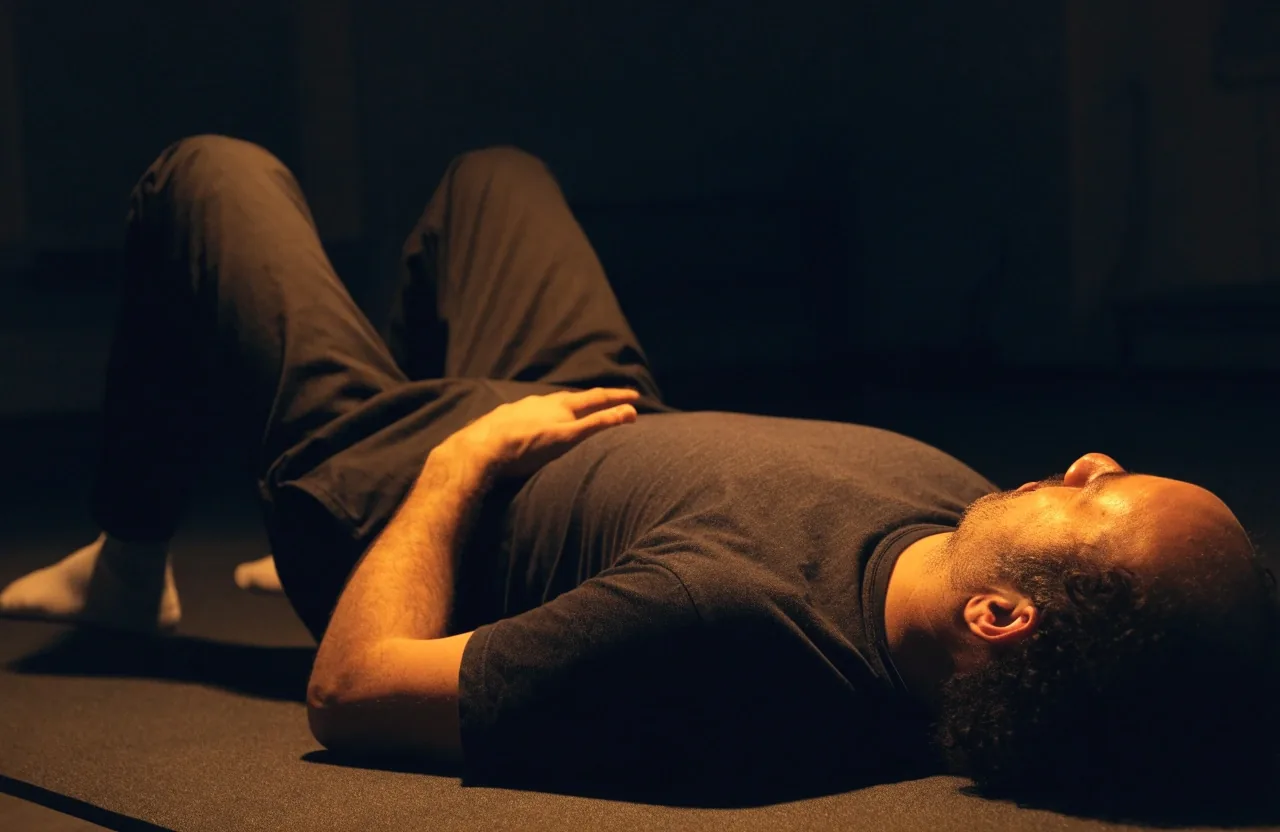
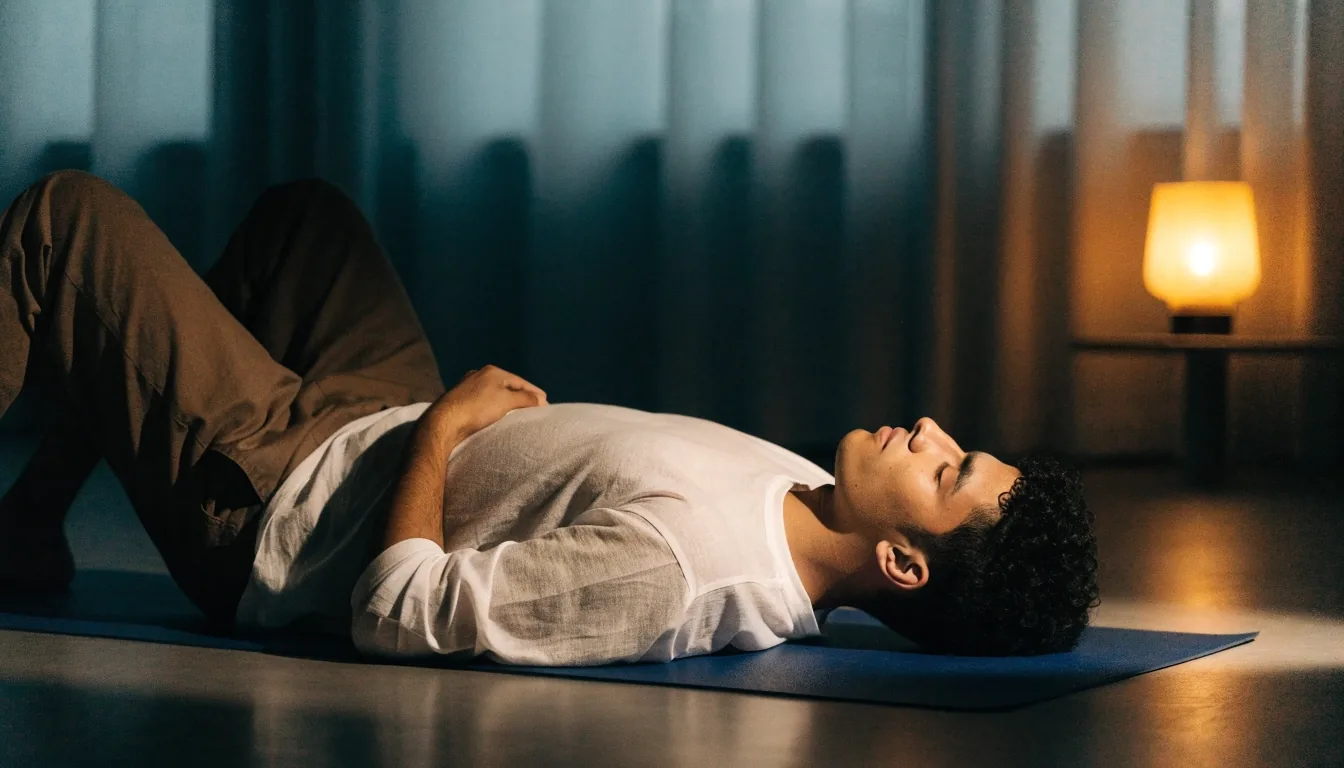
The learning position. Knees bent, back settled, one hand on the lower abdomen so you can feel whether the belly stays quiet. Start here if you cannot yet tell a squeeze from a brace.
Easiest to notice the lift
Sitting
Feet flat, weight even, spine tall. Sitting brings the practice closer to the way these muscles work during a normal day, which is why many men use it as the second step.
Convenient and closer to daily use
Standing
Gravity and balance add work, so the squeeze gets harder to keep clean. Save it for the stage where the movement already feels familiar.
Hardest of the three
Breathing normally while you exercise
Holding your breath is the most common mistake described in beginner guidance. You should be able to breathe normally throughout a set. If you cannot talk or breathe steadily, the squeeze is probably too hard or too long. Lower the effort and keep the breathing rhythm steady.
This is not a stamina exercise. It is a coordination exercise. A useful test: count out loud to four while you hold. If the count comes out strained, shorten the hold rather than pushing through it.
A short daily set you can keep
Common guidance suggests repeating the exercise several times per day in short sessions rather than one long workout. Examples in published guides range from 5 repetitions to 10 repetitions per set, depending on the source. Consistency matters more than intensity here.
A short set you actually do most days is more useful than a long set you do once. Our home practice routine page builds a simple daily plan around this idea, with rest cues and realistic session lengths.
Sources differ on exact numbers, so treat these as the range you will see described rather than a target to hit. Quality of each repetition comes first; the count follows.
The other half of the set
Relaxation is half the exercise
Relaxation is the counterpart to contraction, and it appears in content about release work and reverse Kegels. This matters for readers who overclench during exercise. If you finish a set and the muscles still feel switched on, you have not finished the set.
Spend a few slow breaths letting go. Learning to release is a skill in its own right, and it is the part most beginners never practise deliberately.
Everyday habits that support the practice
Pelvic floor work sits inside a wider picture of everyday men's wellness. Public-health pages increasingly frame it that way, alongside movement, breathing, sleep, and routine. The same muscles support the bowel as well as the bladder, which is why official guides sometimes use the image of stopping wind to help people locate them.
Posture and breathing habits show up in that guidance too. A tall spine and an unhurried breath give the squeeze somewhere to happen; slumping and shallow breathing make it harder to tell whether the pelvic floor is doing the work.
Posture
Stand and sit tall so the muscles are not already compressed before you squeeze.
Breathing
Slow, ordinary breaths rather than held ones, on and off the mat.
Toilet habits
Unhurried, without straining, and without pushing the squeeze into the moment.
Daily movement
Ordinary walking and standing, so the practice is not the only load the area gets.
We do not diagnose anything. We do not tell you that exercises will fix a specific problem. We do not sell a program, and we do not run affiliate offers. The content is instructional: what the movement is, how to practise it, and how to build a routine you can keep.
If something feels wrong while you practise, stop and speak to a qualified professional who knows your situation. That is the honest boundary of an instructional page, and we would rather state it plainly than work around it.
How to use this site
Move through the pages in the order below, or start wherever your question is. Each page stands on its own, and the order is only a suggestion for a first read.
Questions men ask first
Short answers to the practical points that come up before anyone starts. The common questions page collects more.
A common cue is the feeling of stopping wind or interrupting urine mid-flow, used only to identify the muscles, not as a regular exercise. You should feel a gentle lift between the anus and the scrotum. If your thighs, buttocks, or abdomen are doing the work, reset and try again with less effort.
How many repetitions should a beginner do?
Published guides vary, with examples from 5 to 10 repetitions per set, repeated a few times across the day. Start at the low end and keep the quality of each repetition steady rather than chasing the top of the range.
How long should each squeeze and rest last?
Start with shorter holds and build up gradually. Rest at least as long as you held, and make sure you have fully released before the next repetition. If the release feels incomplete, the next squeeze will not be clean either.
Should I practise lying down, sitting, or standing?
All three are used. Lying down is usually easiest for learning the squeeze. Sitting is convenient. Standing is harder and better once the movement feels familiar, because balance and gravity take some of your attention away from the squeeze.
Can I breathe normally while doing these?
Yes, and you should. If you are holding your breath, reduce the effort or the hold time until your breathing stays steady. A steady breath is a better sign of correct effort than a longer hold.
What is the difference between a slow hold and a quick contraction?
A slow hold is a squeeze held for a few seconds followed by a full release. A quick contraction is a fast tighten and release. Beginner routines often pair them, with slow holds first and quick contractions added once the slow ones feel controlled.
Start where your question is
Read the Kegel exercises page for the movement pattern. Read the positions page to pick your starting position. Read the home practice page for a daily plan. Then read the everyday care page for the habits around it.
Pelvic Floor Practice is an educational resource based in Jakarta. If you would like to ask a question about the material, or tell us that something on the site is unclear, write to us at [email protected] or call +62 21 530 2811 during office hours.