

No promises, no equipment, no product
Kegel Exercises for Men, Step by Step
Squeeze the pelvic floor muscles, hold briefly, release fully. This page covers the basic movement pattern and a short at-home routine you can repeat without buying anything.
The movement in one line
Squeeze, hold, release — that is the whole exercise
The pelvic floor muscles support the bladder and bowel openings in men. Most guidance pages introduce them with a squeeze-and-lift cue rather than medical terminology, and that is the approach here. If you can feel a gentle lift and then a complete release, you have the pattern. Everything else on this page is detail about doing those three steps well.
There is no product to buy and nothing to measure. Read the movement once, try a short set, and see how it feels later in the day. If a step does not make sense, the sections below explain each part of the squeeze in the order most men need them.
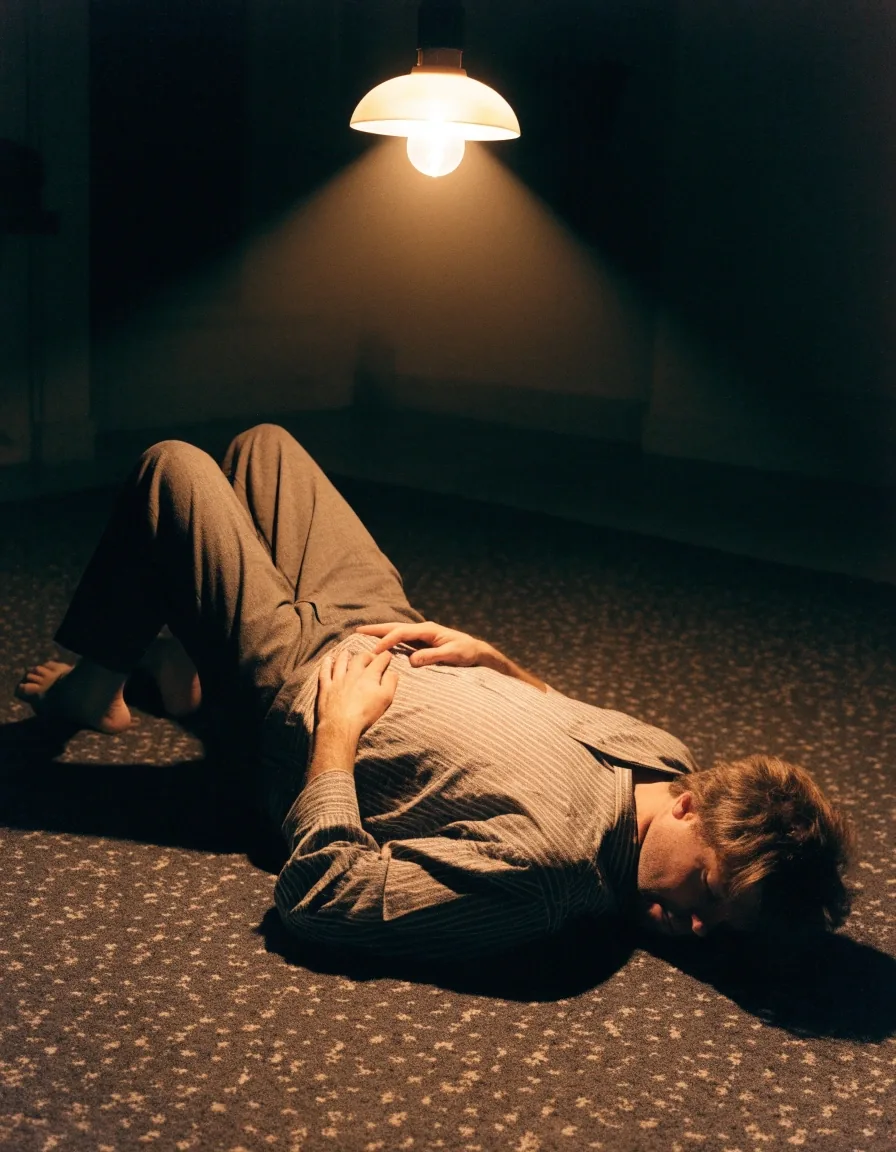
Lying down with the knees bent makes a small movement easier to notice, because the rest of the body is supported.
Finding the muscles
Finding the pelvic floor muscles without straining
A common instruction is to imagine stopping wind, or to imagine interrupting urine mid-flow. Use these only to identify the muscles once. Do not practise by stopping urine regularly, and do not practise while on the toilet. The muscles you are looking for sit between the anus and the scrotum.
A lift, not a push
When you squeeze, you should feel the muscles rise toward your belly button. Pushing down is the opposite of what you want, and it usually means you are bearing down instead of lifting.
Start lying down
If you are unsure, try the cue lying on your back with your knees bent and your feet flat. It is easier to notice a small movement when the rest of your body is supported and not holding you up.
Identify once, then stop
The toilet cues are for finding the muscles, not for training them. Once you can feel the lift, move your practice away from the bathroom and into a normal room where you can breathe freely.
If you cannot feel anything at all, that is common on the first attempt. Reduce the effort rather than increasing it, and check again on the next exhale. A small, quiet squeeze that you can locate beats a hard one that disappears into surrounding muscles.
Keeping the helpers out of it
Keeping the thighs, buttocks and abdomen relaxed
Many guidance pages recommend keeping your thighs, buttocks and abdomen relaxed while you practise. That is harder than it sounds, because those muscles are used to joining in whenever the body tenses.
A quick check: put one hand on your stomach and one on your buttock. Squeeze the pelvic floor and see whether either hand feels the muscle tighten. If they do, you are bracing instead of isolating. Reduce the effort and try again. A smaller squeeze that stays in the right place beats a big squeeze that recruits everything.
Next chapter: how the same squeeze changes when you lie, sit or stand.
Slow holds
How to build the count without losing control
Start with a hold you can control, then add time gradually. Michigan Medicine's male pelvic floor guide recommends starting with shorter holds and building up. A practical approach is to hold for two or three seconds at first, rest for the same amount, and repeat five times.
Hold for two seconds
The starting count for most beginners
Rest for the same two seconds
Release fully before the next repetition
Repeat five times
One set, then a break before the next
Add a second when it feels easy
Only when every repetition stays controlled
The count is not the goal. Control is. If the last repetition in a set feels sloppy, the set was too long. Shorten it, finish clean, and come back to it later in the day.
Quick contractions
Adding a faster set after your slow holds
Quick contractions are short, fast tighten-and-release repetitions. Health New Zealand includes a set of them after slower holds, and NHS resources describe quick tighten-and-release reps in a similar way. They are not a harder version of the slow hold. They are a faster one.
Do them after your slow holds, keep the movement small, and stop the set if your breathing gets ragged. Five quick contractions is plenty for a first attempt. If they turn into a clenched hold, you have slowed them down without noticing.
Breathing normally through the set
You should be able to breathe normally while you squeeze. Holding your breath is the most common beginner error and it usually shows up when the hold gets long.
If you notice yourself tensing your jaw or stopping mid-breath, shorten the hold. Some men find it helps to count out loud quietly, because you cannot speak and hold your breath at the same time.
Relaxing between repetitions
The release is part of the repetition
Relaxation is part of the repetition. Good technique requires fully letting go between reps, and this matters especially if you tend to overclench during exercise. Give yourself at least as much rest as you held.
If the muscles still feel switched on after the set, spend a few slow breaths releasing before you move on. Learning to let go is a skill, and it belongs in the same routine as the squeeze.

Your first set
A beginner set you can repeat today
Try this once, then see how it feels later in the day. Published guidance commonly suggests repeating short sets several times per day rather than one long session, with examples ranging from 5 to 10 repetitions per set depending on the source. Keep it short enough that you would be willing to do it again tomorrow.
Set one — slow holds
Five slow holds at a two-second squeeze with a two-second release. Breathe normally throughout, and let the muscles soften completely between each one.
Set two — quick contractions
Five quick tighten-and-release reps, small and fast, straight after the slow holds. Stop the set early if your breathing gets ragged.
Repeat a few times across the day
What to change if it is not working
If you cannot feel the squeeze, go back to lying down with knees bent and try a smaller effort. If you feel it in your stomach or buttocks, you are bracing. If you cannot breathe, the hold is too long. If you finish a set and feel clenched rather than released, add a relaxation round before the next set. These are the four adjustments that solve most beginner problems.
Where to go next
Once the basic movement feels familiar, the other pages on this site cover position, routine and everyday habits in more detail.
Common questions
Questions men ask first
Short answers to the five things that come up most often on this page. If your question is not here, the full list covers more ground.
Can I do Kegel exercises while breathing normally?
Yes. Breathing normally is the standard. If you cannot, shorten the hold or reduce the effort until you can.
How long should I hold each squeeze?
Start with a short hold you can control, such as two or three seconds, and build up gradually. Rest at least as long as you held.
How often should I practise?
Common guidance suggests several short sets across the day rather than one long session. Consistency is treated as more useful than intensity.
What if I feel it in my stomach or buttocks?
That means surrounding muscles are helping. Reduce the effort and check again with a hand on your stomach. A smaller, isolated squeeze is the target.
Should I practise on the toilet?
No. The stopping-urine cue is only for identifying the muscles once. Practise elsewhere, such as lying down, sitting, or standing.
About this page
What this page is, and what it is not
This page is an instructional overview of the basic Kegel movement pattern for men. It explains the squeeze, the hold, the release, and how to build a short set at home without equipment. It is written in plain language for readers who want to understand the movement before they try it.
No outcome is promised here. The routine is described because repetition is how the movement becomes familiar, not because any particular result follows. The cues in this guide come from published guidance for men, including Michigan Medicine, Health New Zealand and NHS resources, which describe the same squeeze-and-lift pattern in slightly different words.
If you have ongoing concerns about your pelvic area, speak with a qualified professional. This page is general information, not individual advice, and it cannot replace an assessment from someone who can examine you.
Where the guidance comes from
The movement cues and the short-set approach on this page follow published male pelvic floor guidance from recognised public health sources. We keep the wording plain and leave out anything we cannot point to.
- Address
- Jl. Cikini Raya No. 58, Menteng, Jakarta Pusat 10330, Indonesia
- [email protected]
- Phone
- +62 21 530 2811
- Working hours
- Monday to Friday, 9:00 AM – 6:00 PM; Saturday, 9:00 AM – 1:00 PM